Table of Contents
Wondering how to prepare a motorcycle for storage? Skipping the prep steps might seem harmless in the short term, but a few months of improper storage can lead to dead batteries, stale fuel, corroded parts, and flat-spotted tires — all of which are costly and frustrating to deal with when riding season rolls back around.
The good news is that knowing how to prepare a motorcycle for storage doesn't have to take all day. Follow these steps, and you'll be confident your bike will come out of storage in the same condition it went in.
1. Do a Full Service Check Before Storage
The first step in learning how to prepare a motorcycle for storage is making sure your bike is mechanically sound before it sits for an extended period. Before your motorcycle goes into storage, take the time to do a thorough inspection and any overdue maintenance. It's much easier to address mechanical issues now than to discover them when you're eager to ride again in the spring.
Check and address the following:
- Oil and filter — Old oil contains contaminants and acids that can damage engine components over time. Change the oil and filter before storage, so your engine sits in clean oil all season.
- Coolant — Check the coolant level and condition. Old or low coolant can freeze in cold storage environments, causing serious damage.
- Brake fluid — Brake fluid absorbs moisture over time, which can lead to corrosion inside the braking system. Top off or replace if needed.
- Air filter — A dirty air filter left in storage can harbor moisture and debris. Clean or replace it before storing.
- Chain and cables — Lubricate the chain and all cables to prevent rust and corrosion during storage.
Taking care of these items now means your bike will be truly ready to ride the moment you pull it out of storage — not stuck in the shop waiting for a service appointment.
2. Stabilize or Drain the Fuel System
One of the most important steps in preparing a motorcycle for storage is dealing with the fuel system. Gasoline begins to degrade in as little as 30 days, and stale fuel can clog carburetors, injectors, and fuel lines — leading to expensive repairs.
You have two options:
- Add a fuel stabilizer — Fill the tank to the top to minimize the air space where moisture can collect, then add a quality fuel stabilizer according to the product instructions. Run the engine for a few minutes to circulate the stabilizer through the entire fuel system.
- Drain the fuel system completely — If you prefer, you can drain the tank, carburetor float bowl, and fuel lines entirely. This is a good option for longer storage periods or if you're storing the bike in a location where fuel vapors are a concern.
Either approach works well — the key is to not leave untreated fuel sitting in your system for months at a time. Understanding how to prepare a motorcycle for storage goes beyond just filling the tank — protecting every system on the bike is what separates a smooth spring startup from a costly repair bill.
3. Protect the Battery
A motorcycle battery left sitting without care over a long storage period will almost certainly lose its charge, and repeated deep discharges can permanently damage a battery, meaning you'll need a replacement come springtime.
To protect your battery during storage:
- Remove the battery from the bike entirely if possible and store it somewhere cool and dry, away from direct concrete contact.
- Use a battery tender or trickle charger to keep the battery at a healthy charge level throughout the storage period. A smart battery tender is an inexpensive investment that can significantly extend battery life.
- Check the terminals for corrosion before storage and clean them if needed with a wire brush and a mixture of baking soda and water.
If removing the battery isn't practical, at minimum, connect a battery tender to maintain the charge while the bike sits.
4. Take Care of the Tires
Tires are one of the most overlooked aspects of motorcycle storage prep — and neglecting them can lead to flat spots, cracking, and uneven wear that compromises handling and safety once you're back on the road.
Here's what to do:
- Inflate tires to the recommended pressure before storage. Tires naturally lose air pressure over time, and starting at the correct PSI reduces the chance of flat spotting.
- Get the tires off the ground if possible. Use a front and rear paddock stand to lift both tires off the floor during storage. This completely eliminates the risk of flat spots.
- If stands aren't available, move the motorcycle slightly every few weeks to rotate the tire contact points and prevent flat spotting.
- Avoid parking on bare concrete for extended periods — concrete can draw moisture into the tire and accelerate aging. Place a piece of carpet or plywood under the tires if stands aren't an option.
5. Clean and Protect the Exterior
Putting a dirty motorcycle into storage is a recipe for corrosion and paint damage. Dirt, grime, road salt, and bug residue all contain acids and moisture that can eat into paint, chrome, and metal surfaces over time.
Before storage, give your bike a thorough wash and dry, then:
- Apply a coat of wax to all painted surfaces to create a protective barrier against moisture and oxidation.
- Apply a metal polish or protectant to chrome and exposed metal parts.
- Spray exposed metal components — such as the exhaust pipes — with a light coat of WD-40 or a dedicated corrosion inhibitor to prevent rust.
- Lubricate all pivot points, including the kickstand, foot pegs, and levers.
A clean, well-protected motorcycle will come out of storage looking as good as it went in.
6. Choose the Right Storage Environment
Even with perfect prep work, where you store your motorcycle matters. The ideal storage environment is cool, dry, and stable in temperature. Avoid storing your bike anywhere with high humidity, extreme temperature swings, or direct sunlight exposure — all of which accelerate wear and corrosion.
A few key tips for storage environment:
- Use a breathable motorcycle cover — never a plastic tarp, which traps moisture and can cause rust and mildew. A fitted, breathable cover protects against dust and minor moisture without sealing it in.
- Avoid storing near windows where sunlight can fade and crack rubber and plastic components.
- Plug the exhaust pipe with a clean rag or a dedicated exhaust plug to keep mice, insects, and moisture out of the engine.
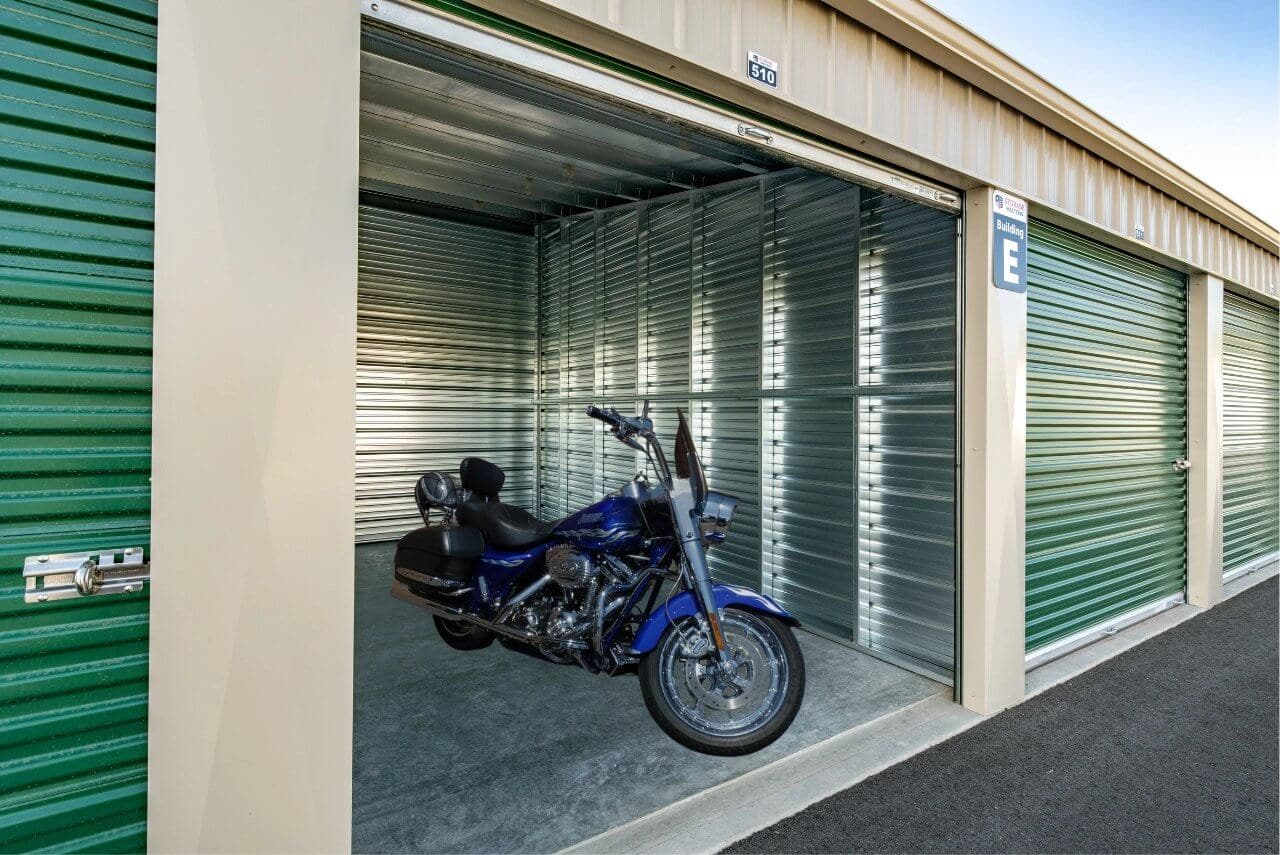
- Consider a dedicated storage unit if you don't have a climate-controlled garage. A clean, secure indoor storage unit protects your bike far better than an outdoor shed or uncovered driveway.
7. Do a Quick Checklist Before Walking Away
Before you lock up your storage unit or garage, run through this final checklist:
- ✅ Oil and filter changed
- ✅ Fuel stabilized or drained
- ✅ Battery removed or connected to a tender
- ✅ Tires inflated and off the ground if possible
- ✅ Bike washed, waxed, and protected
- ✅ Exhaust plugged
- ✅ Motorcycle cover on
Store Your Motorcycle With Purely Storage
Now that you know how to prepare a motorcycle for storage, the next step is finding a safe, secure place to keep it. Purely Storage offers clean, secure storage units in a variety of sizes — perfect for motorcycles, recreational vehicles, and seasonal gear. Our gated, video-monitored facilities give you peace of mind knowing your bike is protected, and our flexible month-to-month leases mean you only pay for the storage you need.
With locations across Arizona, California, Colorado, Tennessee, Utah, and Washington, and 24/7 online reservations, finding and renting the right unit has never been easier. Browse available units at a Purely Storage location near you and get your motorcycle squared away for the season today.