Table of Contents
- Why the Off-Season Is the Riskiest Time for Your RV or Boat
- When to Move Your RV or Boat Into Storage
- How to Winterize an RV Before Storage
- Boat Winterization Checklist Before Storage
- Outdoor, Covered, or Enclosed: Choosing the Right Space
- How Much Space Do You Need?
- Five Mistakes That Cost Owners the Most
- Find Winter RV and Boat Storage Near You
- Winter RV and Boat Storage FAQs
Winter RV and boat storage is the difference between rolling out in spring with a rig that starts on the first turn and spending your first warm weekend paying for cracked plumbing, a dead battery, and a mildewed interior. Every year, RV and boat owners across California, Washington, Arizona, Colorado, Utah, and Tennessee park their vehicles at the end of the season, walk away, and discover in April that the off-season did more damage than the whole summer of use. The good news: a few hours of prep and the right storage space prevent almost all of it. Here is exactly what to do, and when.
Why the Off-Season Is the Riskiest Time for Your RV or Boat
An RV or boat sitting still for five months faces problems it never faces in motion. Water left in plumbing lines expands when it freezes and cracks PEX tubing, fittings, faucet housings, water pumps, and water heater tanks — damage that often stays invisible until you pressurize the system in spring and find a leak. Ethanol-blended fuel starts breaking down in as little as 30 days without a stabilizer. Batteries left fully discharged over winter sulfate permanently. And a vehicle parked in an open lot or under a tree collects UV damage, sap, standing water, and rodents.
Meanwhile, driveway parking is getting harder. HOA rules, city ordinances, and neighbors all tend to notice a 34-foot Class A parked out front from October to April. That is why demand for dedicated RV storage and boat storage spikes in early fall — and why the best-located spaces at popular facilities fill first.
When to Move Your RV or Boat Into Storage
The trigger is not a date on the calendar. It is the first stretch of nights at or below freezing. Water freezes at 32°F, and many experienced technicians treat 40°F as the safer cutoff, since a single overnight dip is enough to crack a fitting. Use your local forecast, and use these regional windows as a planning guide:
- Mountain and high-elevation areas (Colorado, northern Utah): finish by the end of September. First freezes routinely arrive in September at elevation.
- Inland Pacific Northwest (Kennewick, Pasco, West Richland): target mid-to-late October, before the Columbia Basin's first hard freeze.
- Middle Tennessee (Murfreesboro): late October is the sweet spot, ahead of early-November freezes.
- California's Central Valley and high desert (Bakersfield, Lancaster, Yucca Valley, Sacramento): watch November forecasts. Valley fog and desert overnight lows both surprise people who assume "California" means frost-free.
- Low-desert Arizona (Buckeye): freezes are rare, but UV exposure and dust are the real enemies — the case for covered storage here is sun, not ice.
One practical note: if you use a mobile tech or dealership for winterization, book in late August or early September. Rush season fills their calendar fast.
How to Winterize an RV Before Storage
Water system (do this first)
- Drain the fresh water tank, gray tank, and black tank, then flush the black tank thoroughly.
- Open all low-point drains, the city water inlet, and the tank flush inlet.
- Drain and bypass the water heater — never add antifreeze to a full water heater tank.
- Pump RV-safe (non-toxic, pink) antifreeze through every line until it runs pink from each hot and cold faucet, the toilet, the shower, and the outside shower.
- Pour a cup of antifreeze down each drain to protect the P-traps.
Engine, battery, and propane
- Add fuel stabilizer and top off the tank to limit condensation.
- Change the oil and filter so contaminants do not sit in the engine all winter.
- Disconnect the coach battery, or leave it connected to a smart maintainer. Store loose batteries indoors, off bare concrete.
- Close all propane valves and winterize the generator per the manufacturer's instructions.
Interior
- Remove every food item, liquid, and aerosol — including the pantry items you forgot last year.
- Clean thoroughly, then prop the refrigerator and freezer doors open to prevent mold.
- Set rodent deterrents at entry points and seal gaps around plumbing pass-throughs with steel wool.
- Close blinds and cover windows to protect upholstery from sun fade.
Exterior
- Wash and wax the exterior; road grime holds moisture against the finish.
- Inspect and reseal roof seams, vents, skylights, and window edges. A pinhole leak becomes a ceiling stain over five wet months.
- Inflate tires to spec, then add UV tire covers. Flat-spotting and sidewall cracking are the most common storage damage of all.
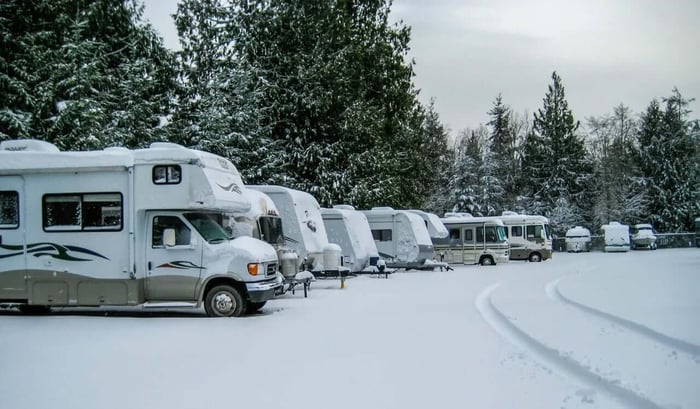
- Use a breathable RV cover for uncovered outdoor spaces — not a plastic tarp, which traps moisture.
Boat Winterization Checklist Before Storage
Boats need the same discipline, aimed at slightly different systems:
- Flush and drain the cooling system. Outboards get flushed with fresh water using muffs; inboards and stern drives need raw-water systems, manifolds, and heat exchangers filled with antifreeze.
- Stabilize the fuel. Add stabilizer per label directions (commonly about 1 oz per 2.5 gallons), run the engine roughly ten minutes to circulate it, and fill the tank to about 95% to reduce oxidation space.
- Fog the cylinders and change engine oil and lower-unit gear lube. Grease fittings and pivot points; pull and store the propeller.
- Manage the batteries. Remove and store them indoors, or leave a smart trickle charger connected. A fully discharged battery will not come back.
- Inspect the hull for cracks, blistering, and soft spots, and replace worn zincs.
- Cover it properly. Use a breathable, well-supported cover or vented shrink wrap so water cannot pool and mold cannot take hold.
- Strip the interior of electronics, food, and loose gear, and photograph any existing damage for your insurance records.
Outdoor, Covered, or Enclosed: Choosing the Right Space
Three levels of protection, three price points:
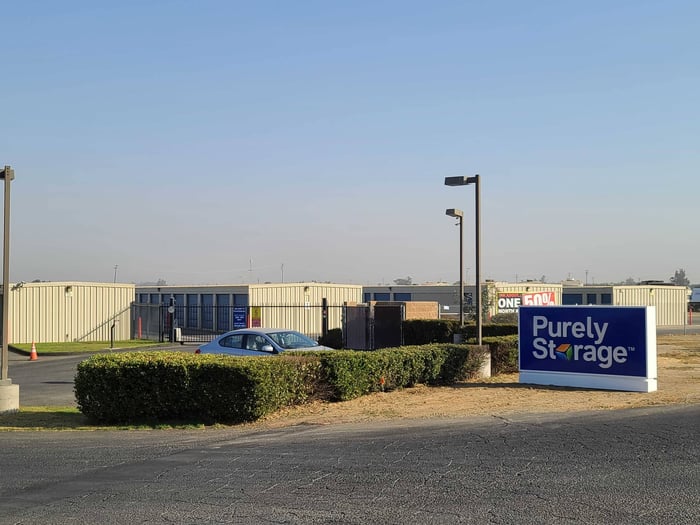
- Outdoor parking is the most affordable option and works well for shorter storage in mild climates, especially with a quality cover. Look for paved or well-maintained gravel, wide drive aisles, gated entry, and perimeter fencing.
- Covered RV storage adds a roof, which is the single biggest upgrade you can make. It blocks the UV, hail, sap, and standing water that ruin roofs, decals, seals, and gel coat. In sun-heavy markets like Buckeye, Lancaster, and Bakersfield, covered spaces are worth the premium and they sell out first.
- Enclosed or climate-controlled space suits smaller vehicles, classic cars, jet skis, and motorcycles, plus the gear that comes out of the rig. More than 40% of new self-storage units built nationwide are now climate-controlled, largely because owners have learned what humidity swings do to electronics, upholstery, and leather. Our vehicle storage options cover this range.
A useful hybrid: park the RV or boat outdoors or under cover, and rent a small standard unit nearby for cushions, linens, electronics, tools, and camping gear. It keeps soft goods out of a damp cabin, and it is usually cheaper than upgrading the whole vehicle space. Our storage unit size guide helps you pick between a 5x5 and a 5x10 for that overflow.
How Much Space Do You Need?
Measure your rig from the front bumper to the rear-most point — including bike racks, spare tires, ladders, and swing-out arms — then add three to four feet of buffer so you are not inching in every time. For boats, measure the trailer tongue to the outboard, and account for the tower or bimini if it does not fold. As a rough guide: pop-ups and small trailers fit 20–25 foot spaces; travel trailers and mid-size boats need 25–35 feet; Class A motorhomes and fifth wheels generally need 40 feet or more. If you misjudge it, Purely Storage lets you switch to a different space size rather than locking you into the wrong fit.
Five Mistakes That Cost Owners the Most
- Waiting for the first freeze warning. By then the good spaces are gone and the winterization shops are booked out two weeks.
- Skipping the antifreeze because "it barely gets cold here." One 28°F night in the Central Valley cracks a fitting just as effectively as a Colorado cold snap.
- Using a plastic tarp instead of a breathable cover. Tarps trap condensation and create exactly the mold problem you were trying to prevent. Our guide to mold and pest prevention in storage units goes deeper on this.
- Leaving food, or the crumbs from it, on board. Rodents need very little encouragement and do expensive wiring damage.
- Never visiting. A quick monthly check — start the engine, look at the tires, glance at the roof and cover — catches small problems while they are still small.
Find Winter RV and Boat Storage Near You
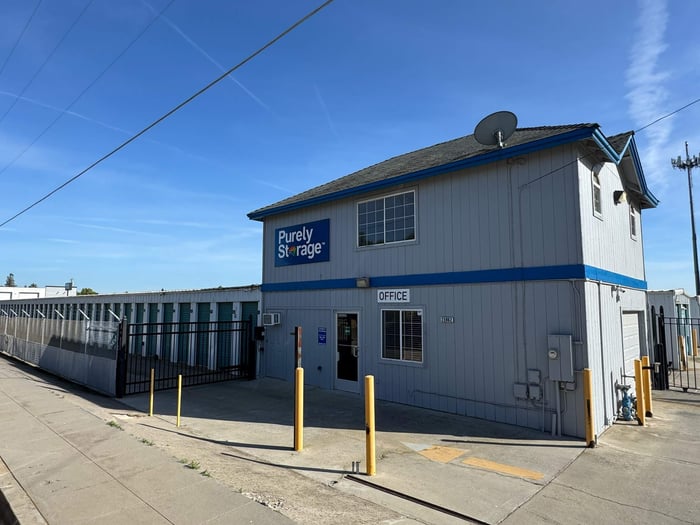
Purely Storage is a family-owned operator with facilities across California, Washington, Arizona, Colorado, Utah, and Tennessee, offering outdoor and covered parking with gated entry, perimeter fencing, wide drive aisles, and well-maintained grounds — plus upfront, honest pricing with no hidden fees and month-to-month terms, so you are not paying for space you no longer need come spring. Browse all locations or search storage units near me to see availability and rent online in a few minutes.
Winter RV and Boat Storage FAQs
How much does winter RV and boat storage cost?
Pricing depends on the market, the length of the space, and whether it is uncovered, covered, or enclosed. For context, the national average for a standard 10x10 self-storage unit sat near $75 per month in early 2026, while big metros run considerably higher and smaller markets lower. Vehicle spaces are priced by footprint, so the most reliable number is the live rate on your nearest facility's page.
Should I store my RV with a full or empty fuel tank?
Full, with stabilizer added. A nearly full tank leaves less room for the air and condensation that cause rust and water contamination. Water tanks are the opposite — those should be completely empty.
Do I really need covered storage, or is a cover enough?
A quality breathable cover handles a mild winter reasonably well. A roof does more, because it stops UV and standing water from working on your roof seams and decals — the two most expensive things to repair. If your rig is newer, or you are in a high-sun market, covered storage generally pays for itself.
Can I access my RV or boat during the winter?
Yes. Access hours vary by facility, so check the location page for the site you are considering, but a monthly visit to run the engine and check the tires and cover is a good habit and easy to schedule.
How long before spring should I de-winterize?
Give yourself two to three weekends before your first planned trip. Flushing the antifreeze, reinstalling batteries, checking tire pressure, and pressure-testing the water system for leaks all take longer than people expect — and if something did crack over the winter, you want to find it in your driveway rather than at a campground.