Table of Contents
- Why Cold Weather Vehicle Storage Matters
- Cold Weather Vehicle Storage Checklist for RVs
- How to Prep a Boat for Winter Storage
- Preparing a Car or Truck for Winter Storage
- Choosing the Right Spot: Outdoor, Covered, or Enclosed
- Purely Storage Locations With RV, Boat, and Vehicle Parking
- Cold Weather Vehicle Storage FAQs
- Get Your Vehicles Ready Before the Freeze
Cold weather vehicle storage is one of those jobs that feels optional in October and urgent in January. Once the first hard freeze hits, an RV with water in its lines, a boat with a half-drained engine, or a car with a tired battery can turn into an expensive spring surprise. The good news is that a few hours of prep now, plus the right place to park, keeps your vehicles ready for the first warm weekend of the year.
Why Cold Weather Vehicle Storage Matters
Winter is hard on anything with an engine, tires, seals, or plumbing. Freezing temperatures can crack water lines and engine blocks, drain batteries, flatten-spot tires, and let moisture creep into upholstery and wiring. Even in milder climates, sitting for months invites stale fuel, rodents, and mildew.
Storing a vehicle off your driveway helps too. Many neighborhoods and HOAs limit how long an RV or boat can sit at the curb, and a gated lot with perimeter fencing keeps your investment out of sight and out of the weather's reach.
Cold Weather Vehicle Storage Checklist for RVs
RVs have the most to lose in a freeze because of the plumbing. Work through these steps before you park:
- Winterize the water system. Drain the fresh, gray, and black tanks and the water heater, then blow out the lines or run RV antifreeze through them. Don't forget the outdoor shower and ice maker.
- Protect the battery. Disconnect it or put it on a maintenance charger. Cold drains a battery faster than most owners expect.
- Treat the fuel. Fill the tank and add a stabilizer, then run the engine and generator for a few minutes so treated fuel reaches the system.
- Seal out pests. Mice can squeeze through gaps the size of a dime. Cover vents and exhaust openings, and skip open food containers inside.
- Prevent moisture. Prop cabinet doors open, add moisture absorbers, and crack a roof vent if your storage allows it.
- Check the roof and seals. Reseal any worn caulking so snow melt doesn't find a way in.
How to Prep a Boat for Winter Storage
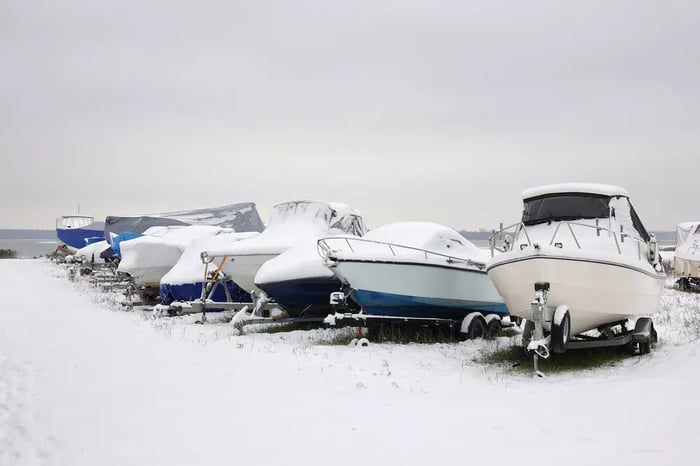
A boat stored with water in the wrong places can crack an engine block in a single cold snap. Before you tuck yours away:
- Drain and flush the engine. Flush with fresh water, drain the block and manifolds, and replace the lower-unit oil on outboards and sterndrives.
- Stabilize the fuel and fog the engine. Add stabilizer, fill the tank to limit condensation, and use fogging oil on the cylinders.
- Empty every compartment. Pull the drain plug, empty livewells and bilges, and remove electronics, cushions, and life jackets.
- Clean and wax the hull. Dirt left on gelcoat over winter can stain it.
- Check the trailer. Grease the bearings, inspect the tires, and make sure the lights work before they're buried under a cover.
- Use a breathable cover. A fitted cover that lets air move beats a plastic tarp, which traps moisture and encourages mildew.
Preparing a Car or Truck for Winter Storage
Cars, trucks, motorcycles, and project vehicles need less work, but skipping the basics causes the most common spring complaints:
- Wash and wax first. Road salt, bird droppings, and dirt can eat through paint over a few months.
- Fill the tank and add stabilizer. A full tank leaves less room for condensation to form.
- Change the oil. Used oil holds acids and contaminants that you don't want sitting in the engine all winter.
- Inflate the tires. Add a few extra PSI, or use jack stands for very long stays, to prevent flat spots.
- Skip the parking brake. Brake pads can stick to rotors in damp weather, so use wheel chocks instead.
- Keep the battery healthy. A battery tender is worth the small investment.
Choosing the Right Spot: Outdoor, Covered, or Enclosed
The right space depends on the vehicle and how long it will sit. Outdoor parking is the most budget-friendly choice and works well for vehicles with good covers. Covered parking adds protection from snow load, sun, and hail. Enclosed or indoor units are best for classic cars, motorcycles, and anything you want shielded from temperature swings and curious eyes.
Whatever you pick, look for gated access, good lighting, wide drive aisles, and large spaces that let you pull in and back out without a struggle. Easy access also matters in winter: you may want to start the engine or check on things mid-season.
Purely Storage Locations With RV, Boat, and Vehicle Parking
If you're searching for cold weather vehicle storage near you, these Purely Storage facilities offer parking for RVs, boats, and other vehicles. Availability and space sizes change, so it's worth contacting the facility to confirm what's open before you head over.
California
- Atwater (East Bellevue Road): RV, boat, and vehicle parking in the Central Valley.
- Hanford (Hanford Armona Road): RV, boat, and vehicle parking in the heart of the Central Valley.
- Porterville (North Plano Street): boat, RV, and vehicle storage.
- Shafter (South Beech Avenue): boat, RV, and vehicle storage near Bakersfield.
- Lancaster (East Avenue I): drive-up units plus RV, vehicle, and boat storage.
- Roseville (Douglas Boulevard): boat, RV, and vehicle storage in the Sacramento area.
- Sacramento (Exposition Boulevard): parking for cars, boats, and smaller RVs.
- San Marcos (West San Marcos Boulevard): boat, RV, and vehicle parking in North County San Diego.
- Yucca Valley (Hopi Trail): RV, boat, and vehicle parking in the high desert.
Arizona, Colorado, and Tennessee
- Buckeye, AZ (West Yuma Road): RV, boat, and vehicle storage in the Phoenix area.
- Loveland, CO (North Grant Avenue): RV and vehicle parking along the Front Range, where winters get serious.
- Murfreesboro, TN (Santana Street): RV and boat parking in Middle Tennessee.
You can also browse the full list of RV storage and boat storage options on our site.
Cold Weather Vehicle Storage FAQs
When should I winterize my RV or boat?
Do it before the first hard freeze in your area. In most places that means October or November, but check the forecast rather than the calendar.
Do I need to start my vehicle during storage?
A battery tender or disconnected battery is usually better than idling. Short engine runs can create more condensation than they clear, so only run the engine long enough to reach full operating temperature.
Is outdoor parking safe for winter storage?
Yes, with a proper cover and good prep. Gated entry, fencing, and lighting add peace of mind, and a covered or enclosed space gives extra protection for more valuable vehicles.
How much should I fill the fuel tank?
Fill it close to full and add a fuel stabilizer. Less empty space means less condensation inside the tank.
Get Your Vehicles Ready Before the Freeze
A little prep goes a long way, and the best spots fill up as temperatures drop. Pick your facility, run through the checklist for your vehicle, and you'll be set for spring. Browse the locations above or visit Purely Storage to find parking near you and reserve online.