Table of Contents
- Why Ski and Snowboard Storage Matters
- How to Store Skis
- How to Store a Snowboard
- How to Store Ski Boots and Snowboard Boots
- Don't Forget the Small Stuff
- Where Should You Store Winter Sports Gear?
- How Much Space Do You Need for Winter Sports Gear?
- Why Climate-Controlled Storage Can Help
- Packing Tips for Your Storage Unit
- Winter Gear Storage in Colorado, Utah, and Washington
- Find Space for Your Ski and Snowboard Gear
Ski and snowboard storage is one of those chores that feels optional until the next season, when you pull out a set of skis with rusty edges, a board with a dried-out base, or boots that smell like a locker room. Winter sports gear is a real investment, and the way you store it between trips matters almost as much as how you use it on the mountain. Whether you're packing up after a great season or finally clearing room before the first snowfall, this guide covers how to clean, protect, and store everything from skis and snowboards to boots, helmets, and outerwear.
It also covers what to do when your garage simply can't hold another set of skis, and how much space you'll need if you move your gear to a storage unit.
Why Ski and Snowboard Storage Matters
Winter gear takes a beating on the slopes, and most of the damage happens afterward if it isn't stored correctly. Here's what can go wrong:
- Rust on edges: Metal edges left damp will corrode in a matter of weeks.
- Dry, damaged bases: Bare bases oxidize and lose their glide when stored without wax.
- Mold and odors: Boots, gloves, and jackets that go into storage damp can grow mildew.
- Warped or cracked gear: Heat, direct sunlight, and heavy items stacked on top can damage skis, boards, helmets, and goggle lenses.
A little care now means you'll hit the first chairlift of the season with gear that's ready to go.
How to Store Skis
1. Clean and Dry Completely
Wipe down your skis to remove dirt, salt, and moisture. Pay special attention to the edges and bindings, then let everything air dry before packing it away.
2. Wax for Storage
Apply a thick layer of wax to the base and edges and leave it on rather than scraping it off. This protects the base from oxidizing and the edges from rust during the off-season. Scrape and buff it when you're ready to ski again.
3. Check Your Bindings
Some manufacturers recommend easing binding tension for long-term storage, while others say to leave the settings alone. Check the guidance for your specific bindings, and have a shop adjust them before the next season.
4. Store Them Properly
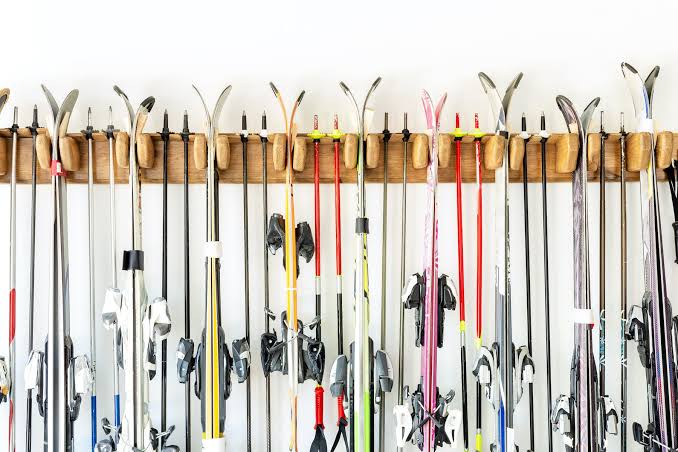
Strap skis together with a ski strap, then store them upright in a rack or flat on a shelf. Avoid leaning them at a steep angle for months, since that can put stress on the camber. A padded ski bag helps protect against dust and dings.
How to Store a Snowboard
Snowboards follow similar rules. Clean the board, dry it thoroughly, and apply a layer of storage wax to the base and edges. Loosen or remove the bindings if you can to relieve pressure on the board. Store it flat or standing upright in a board bag, away from direct heat and sunlight. Never stack heavy items on top of your board.
How to Store Ski Boots and Snowboard Boots
Boots are easy to overlook, but damp liners are the number one source of that winter-gear smell. Pull out the liners, let everything dry fully, and buckle the boots loosely so they hold their shape. Store them somewhere cool and dry, ideally in a boot bag that lets air circulate.
Don't Forget the Small Stuff
- Helmets and goggles: Wipe them clean and store them in a soft pouch or bag. Keep lenses away from heat and sun to prevent scratches and fading.
- Gloves and mittens: Dry them completely, then store them somewhere with airflow.
- Jackets and snow pants: Wash them using a cleaner made for technical fabrics, then dry fully before folding or hanging.
- Poles, skins, and accessories: Group them with the rest of your gear in a labeled bin so nothing goes missing.
Where Should You Store Winter Sports Gear?
The best place is cool, dry, and out of direct sunlight. That rules out hot attics and the trunk of a parked car. A garage can work, but garages are also where tools, bikes, holiday decor, and camping gear tend to pile up. A family with several sets of skis and boards, plus helmets, boots, and outerwear, can fill an entire corner of the garage fast.
If you're running out of room at home, a storage unit gives you a clean, organized place for your winter gear while keeping the garage clear for your vehicles. It's also a handy spot for the rest of your seasonal items, so you can swap summer and winter gear each year.
How Much Space Do You Need for Winter Sports Gear?
Here are some general guidelines, though the right size depends on how much gear you have and how you pack it:
- 5x5: One or two sets of skis or boards, boots, helmets, and a few bins of outerwear.
- 5x10: A family of four's gear, plus extra bins, a ski rack, and some seasonal items.
- 10x10: Winter gear alongside other seasonal equipment like camping gear, bikes, and holiday decor.
Compare options side by side in our storage unit size guide. Stacking vertically with shelves and wall racks lets you fit more in less space.
Why Climate-Controlled Storage Can Help
Temperature and humidity swings are tough on technical gear. Boots, outerwear, goggles, and anything with foam or adhesives can break down in extreme heat or damp conditions. If you're storing high-value equipment, climate-controlled storage is a smart way to protect it. If you'd rather load and unload straight from your vehicle, drive-up storage units make hauling long ski bags and heavy bins much easier.
Packing Tips for Your Storage Unit
- Keep gear off the floor with shelves, pallets, or wall racks to improve airflow.
- Use breathable bags rather than sealed plastic to avoid trapping moisture.
- Label bins by category, like "goggles and helmets" or "gloves and layers."
- Store long items upright or flat and never leave heavy items leaning against them.
- Leave a walkway so you can grab gear before your first trip without unpacking the whole unit.
For more advice, read our storage tips, or browse our self storage FAQ for answers to common rental questions.
Winter Gear Storage in Colorado, Utah, and Washington
If you live in snow country, you know how quickly gear accumulates. Purely Storage has locations in mountain-adjacent and Pacific Northwest communities, including Loveland, Colorado, Parowan, Utah, and the Washington Tri-Cities area, with facilities in Kennewick, Pasco, and West Richland. Whether you're a weekend skier or the family's designated gear hauler, a storage unit can keep everything organized and ready.
Find Space for Your Ski and Snowboard Gear
A few minutes of prep and the right spot make ski and snowboard storage a one-time job instead of a yearly headache. When you're ready, find a storage unit near you, compare sizes and availability, and give your winter gear a safe place to wait for the next snowfall.